Prison Escape Puzzle Adventure
- 4.2
- Rating
- 10.00M
- Installs
- Free
- Price

 Analysis by App-foxy
Prison Escape Puzzle Adventure is the kind of mobile game I open when I want a self-contained challenge rather than a long-term role-playing commitment. It puts me inside a prison and asks me to observe, interpret clues, solve puzzles, and find a route out. The premise is familiar, but the appeal comes from how the setting turns ordinary objects, locked spaces, and suspicious details into parts of a playable mystery.
After spending time with it, my main impression is that the game understands the value of a clear mood. It does not need a huge map or a complicated character system to make a cell, corridor, or guarded area feel meaningful. The visual direction supports the idea of confinement, while the puzzle structure gives every room a practical purpose. I found myself looking at the environment differently: not as decoration, but as a collection of possible answers.
Big Giant Games presents this as an adventure game, and that description fits better than calling it a simple collection of brain teasers. The escape objective gives the puzzles a reason to exist. I am not just matching symbols because the next level demands it; I am trying to understand how the place works and how its barriers might be overcome. That small difference helps the experience feel more connected from one scene to the next.
You May Also Like

 Pandora - Music & Podcasts
Pandora’s Music Is Easy to Start, but Harder to Recover
Pandora’s strength is its low-effort path from a seed to a station. Its weak spot is how much confidence it asks you to place in connection, setup, and quiet recovery.

 8 Ball Pool
 Is Built on Rivalries, Rematches, and Routine
A close look at the rivalries, rematches, shared routines, and unanswered safety questions that turn a quick pool match into a persistent mobile community.

 Samsung Music
’s Quiet Strength Is Playing What You Already Own
Its reach comes less from spectacle than from dependable access to a personal library. That simplicity is both the app’s strongest retention engine and its ceiling.

 AccuWeather: Weather Radar
AccuWeather Review: A Quick, Clear Forecast for Everyday Decisions
For everyday plans, the best forecast is the one you can understand quickly. AccuWeather makes rain timing, radar, and local conditions easy to act on, with a few trade-offs.

 Hill Climb Racing
Why Hill Climb Racing Still Turns Crashes Into One More Run
A tiny car, a bumpy hill and one more upgrade: Hill Climb Racing keeps resurfacing because its simple chaos makes every near-miss feel personal.

 AliExpress - Shopping App
AliExpress Makes Global Shopping Feel Personal, but Shoppers Bear the Risk
AliExpress turns a global marketplace into a pocket-sized discovery engine. Its reach is useful, its shopping loop compelling, and its trade-offs easy to miss.
More From Our News Desk
View All News


How the prison setting shapes the first impression
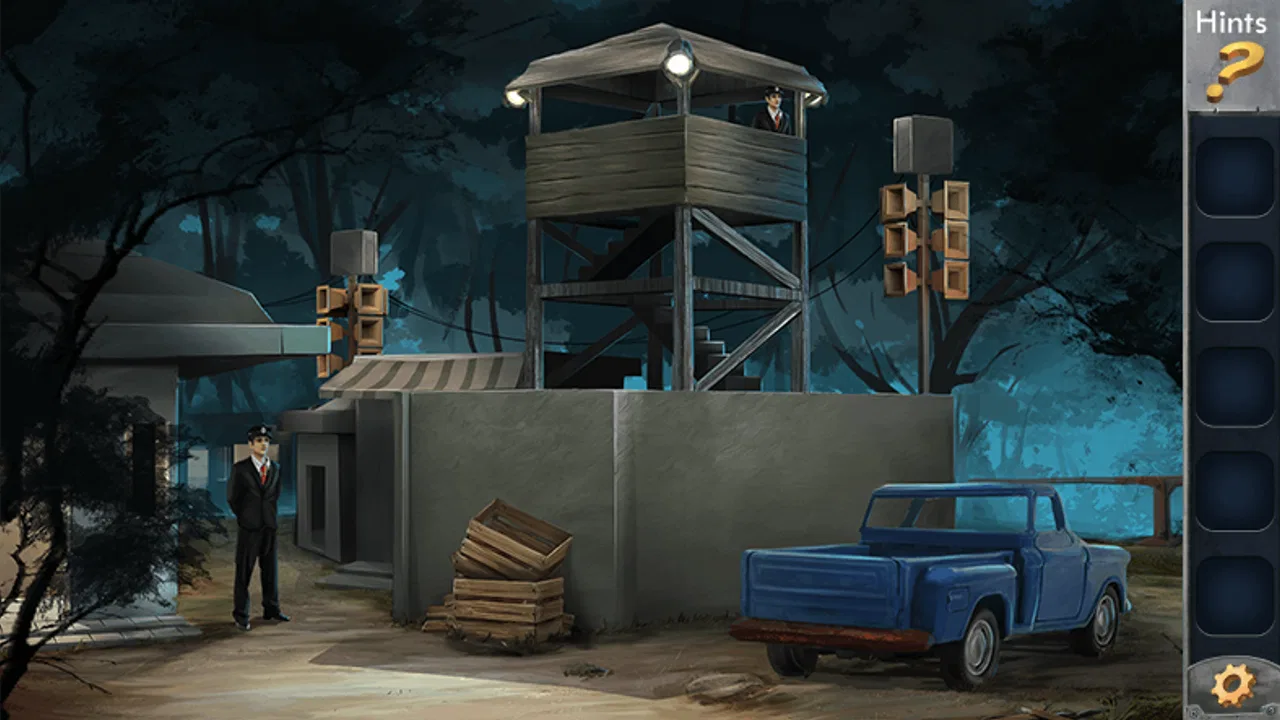
The first few moments establish a useful tension between restriction and curiosity. A prison is naturally made from boundaries: doors, bars, walls, surveillance, and controlled movement. Those elements give the game an immediate visual vocabulary. Even before a puzzle becomes clear, I understand that progress will depend on finding a weakness in the environment.
The art direction is not trying to make the setting cheerful or luxurious. Its strength is consistency. The spaces feel built around function, and that supports the central fantasy of escape. A table, container, notice, object, or marking can become important because the surroundings encourage me to inspect rather than rush past everything. I especially like that the setting makes observation feel appropriate instead of forcing a completely unrelated theme onto the puzzles.
That said, the opening can feel more restrained than players expecting a dramatic action adventure may want. This is primarily an observation-and-puzzle experience. The excitement comes from noticing a relationship between clues, not from controlling a character through fast combat or elaborate platforming. If your idea of an adventure game involves constant movement, cinematic scenes, or a large cast, this may feel quiet.
For me, that quietness is useful during short sessions. I can play while taking a break and still feel that I have made progress, provided I am willing to concentrate. The game works particularly well when I have ten or fifteen minutes to examine a problem without distractions. It is less suitable when I want something I can play almost automatically with one hand while doing something else.
The game is free to download, which makes trying its approach easy. It is aimed at Everyone 10+, a sensible fit for a puzzle adventure built around escape and suspense rather than mature subject matter. Optional in-app purchases range from $0.99 to $12.99 per item, so I would check the purchase prompts carefully if a child is using the device. The free entry point is convenient, but the presence of purchases means it is worth deciding in advance whether you want to spend anything.
A world communicated through objects and boundaries
The most successful part of the presentation is the way the prison communicates without needing long explanations. The setting itself tells me what kind of problem I am facing. A locked door suggests a missing method, a restricted area suggests a sequence of steps, and an apparently ordinary item may deserve closer attention because the environment gives it context.
This is where the visual language and mechanics fit together. In a weaker escape game, rooms can look attractive but offer little guidance about what matters. Here, the prison theme gives visual details a job. I learn to scan the scene for patterns, unusual placements, and objects that might connect with something elsewhere. That habit is more valuable than memorizing a single solution because it carries into later puzzles.
One practical tip I found useful was to stop tapping randomly and divide each room into zones. I would examine the upper area, floor, furniture, walls, and exits separately, then revisit them after discovering a new clue. This simple routine reduces the chance of overlooking a small detail and makes the game feel more like investigation than guessing. It is especially helpful when several objects share similar colors or shapes.
Another good habit is to keep track of information in the order it appears. If I encounter a code, symbol arrangement, or directional hint, I try to consider where it might be used before interacting with every nearby object. That prevents me from treating each puzzle as an isolated lock. The prison layout encourages connections, and patient note-taking can reveal those connections more reliably than repeated tapping.
The trade-off is that environmental puzzles depend on readable presentation. When a clue blends into the background or an interactive object is not visually distinct, the challenge can shift from reasoning to pixel hunting. That is a frustrating kind of difficulty because it tests eyesight and persistence more than understanding. I recommend adjusting the screen brightness and playing on a display large enough to inspect details comfortably.
The setting also affects pacing. A prison naturally suggests a sequence of controlled spaces, so the experience feels more like moving through a chain of obstacles than wandering through an open world. I appreciate that focus because it keeps the objective visible. Players who prefer open exploration, optional side paths, or a world full of unrelated activities may find the structure too narrow.
Sound, silence, and the rhythm of solving
The mood is not created by visuals alone. Sound has an important supporting role because escape puzzles need room for concentration. Rather than making every moment feel frantic, the audio atmosphere helps maintain the sense that I am operating inside a controlled, watchful place. That makes a discovery feel more satisfying: the game gives the solution room to register instead of burying it under constant noise.
I found the best rhythm comes from alternating between stillness and small bursts of progress. I inspect a room, test an idea, reach a locked point, and then pause to reconsider what I have seen. The prison setting makes this pattern feel natural. I am not expected to sprint from one spectacle to another; I am expected to notice something that could change my options.
This pacing is also why the game can work as a casual daily activity. On a commute, during a waiting period, or before bed, I can approach one obstacle at a time. A realistic scenario would be opening the game during a lunch break, solving part of a room, and stopping without losing the larger sense of purpose. It does not demand the same uninterrupted attention as a lengthy story game, although the harder puzzles are easier when I can focus.
There is a downside to this measured rhythm. If I get stuck, the atmosphere can turn from suspenseful to repetitive. Reexamining the same room without a fresh idea does not always feel productive, especially when I am unsure whether I missed a clue or misunderstood the intended sequence. I usually handle this by stepping away for a few minutes rather than tapping everything again. A short break often helps me return with a better view of the scene.
I would choose headphones when I want the strongest sense of place, but the game’s core appeal does not depend on loud effects or a dramatic soundtrack. That is useful for quiet environments where I do not want an intrusive game competing with people nearby. It also means the experience remains centered on visual reasoning. Players who judge mobile games mainly by musical variety may find the audio less memorable than the puzzle design.
Why the mechanics suit the escape theme
The central mechanical fit is straightforward: the prison creates barriers, and the puzzles provide the logic needed to overcome them. That relationship keeps the objective understandable. I always know why I am examining a lock or searching for a clue. The game does not need to invent a separate reward system to make progress feel meaningful because opening a new route already changes my situation.
What I enjoy most is the shift from passive observation to active interpretation. At first, a room may look like a fixed arrangement of objects. After I notice a clue, the same room becomes a set of possible actions. This is the point at which the game feels clever rather than merely decorative. The best moments are not about tapping quickly; they are about realizing that two details belong together.
My advice is to treat every puzzle as a question about relationships. Instead of asking, “What can I tap next?” I ask, “Which detail explains the obstacle in front of me?” That change in wording makes a real difference. It encourages me to look for purpose, sequence, and context, and it reduces the temptation to use trial and error as my main strategy.
Another useful approach is to test one assumption at a time. If I suspect that a clue indicates an order, I follow that order rather than changing several things simultaneously. If the attempt fails, I know which idea needs revision. This is slower than random experimentation, but it makes the logic easier to understand and keeps the escape fantasy intact.
The game is not the right choice for someone who wants a highly social adventure, competitive rankings, or constant character progression. Its satisfaction comes from private problem-solving. I would also skip it if I dislike revisiting locations or examining environmental details. Players who prefer direct objectives and immediate action may be happier with an arcade adventure or an action-focused escape title.
Compared with a typical match-three puzzle game, this experience offers more context and a stronger sense of place, but less instant feedback. Compared with a traditional point-and-click adventure, it is more compact and mobile-friendly, though it may not provide the same depth of dialogue, character development, or branching storytelling. Compared with a real escape-room game, it is cheaper and easier to access, but it cannot reproduce the physical teamwork and tactile discovery of being in a room with other people.
The controls are most comfortable when I use deliberate taps and allow the scene to settle before making another move. That may sound minor, but it affects how fairly I read the puzzle. Fast repeated input can make me overlook an animation, confirmation, or change in the environment. I recommend playing with notifications muted, especially during a difficult section, because the game rewards sustained attention more than quick reactions.
Who will get the most from it
I would recommend Prison Escape Puzzle Adventure to players who enjoy compact mysteries, environmental clues, and the satisfaction of opening a route that initially seems impossible. It is a good fit for someone who likes the idea of an escape room but wants a solo version that can be played on a phone. It also suits families looking for an Everyone 10+ puzzle experience, as long as adults manage in-app purchase settings when appropriate.
It can be useful for casual players who want a game with a clear beginning-to-end purpose rather than an endless service loop. The prison theme gives each session a recognizable direction, and the puzzle structure makes progress feel earned. I also think it is a pleasant choice for fans of atmospheric mobile games that use setting to support mechanics instead of treating visuals as decoration.
I would be more cautious recommending it to players with limited patience for ambiguity. Escape puzzles sometimes expect me to notice what the game considers important, and that can feel unfair when I am not sure whether I am missing a clue or simply using the wrong logic. Anyone who becomes irritated by trying several interpretations should know that the experience asks for persistence.
The game has attracted a substantial audience, with over 10 million installs, and its average rating is 4.3 from around 275 thousand ratings. Those figures suggest that the basic formula connects with many mobile players, but they do not replace personal preference. A large audience cannot make a slow puzzle feel fast or turn environmental searching into action gameplay. I would still judge it by whether its deliberate pace matches the way you like to play.
Practical details before you play
The title was released on May 6, 2015, and the current version is 14.3. It requires Android 7.0 or later, so I would check the operating system before planning to install it on an older device. The game is free, but optional purchases sit between $0.99 and $12.99 per item. I see that as a reasonable reason to review device purchase controls before handing the phone to a younger player.
One question many players have is whether they need to prepare for a long uninterrupted session. In my experience, the structure is better suited to separate bursts of attention than to an all-day commitment. You can approach a room, make progress, and return later, but the mental thread of a difficult clue may be easier to preserve if you jot down a short note. I often record the order of symbols or the location of an unusual object rather than relying on memory.
Another question is whether hints are necessary. I would avoid seeking help immediately. First, rescan the room systematically, then review the last clue you understood and ask what obstacle it was meant to explain. When I use outside help too early in an escape game, I may clear the lock without learning the pattern of reasoning the game is trying to teach. A hint is most useful after I have genuinely tested the obvious interpretations.
Players may also wonder if the game is suitable for playing without sound. It remains playable because the essential challenge is visual and logical, but sound can strengthen the enclosed mood and make the experience feel less flat. If you are in public, silent play is practical; if you are at home and want atmosphere, headphones add more to the setting than to the raw difficulty.
Finally, I would consider the device itself. Small screens can make detailed inspection tiring, particularly when several objects are close together. A clean, bright display makes the game more comfortable, and a stable connection during installation or updates is sensible. Once I am solving, the most important resource is not processing power but attention.
The atmosphere holds when the puzzles lead
What stays with me is the coherence between the prison’s visual language, its controlled rhythm, and the act of solving. The setting gives the puzzles weight, while the puzzles stop the setting from becoming a static backdrop. I am always looking for a way to transform observation into movement, and that creates a quiet but effective sense of pressure.
There are moments when the experience can feel too dependent on noticing a small detail, and the measured pace will not suit everyone. Still, those limitations are tied to the same design choice that gives the game its identity. It wants me to slow down, inspect the environment, and think through the route rather than overpower obstacles with speed.
My final recommendation is positive for anyone who enjoys atmospheric escape-room puzzles more than action-heavy adventure. Big Giant Games has built a focused mobile experience where art direction and sound support the mechanics instead of distracting from them. I would install it when I want a free, solo challenge with a clear setting, and I would skip it only if I needed fast combat, open exploration, or a highly social format. The strongest reason to try it is simple: the prison feels like a puzzle before it feels like a backdrop, and that makes each successful step toward freedom more satisfying.
FAQs for Prison Escape Puzzle Adventure
01What is the main objective of Prison Escape Puzzle Adventure?
Prison Escape Puzzle Adventure challenges players to solve intricate puzzles to escape from a high-security prison. The game combines elements of mystery and strategy, requiring players to use logic and creativity to navigate through various rooms, find hidden objects, and ultimately break free. Each level presents unique challenges and surprises.
02Is Prison Escape Puzzle Adventure suitable for all ages?
While the game is designed to be engaging for a wide audience, it is generally suitable for older children and adults due to its complex puzzles and suspenseful theme. Parents may want to review the content first to ensure it aligns with their expectations for younger players.
03Does the game require an internet connection to play?
Prison Escape Puzzle Adventure can be played offline, making it convenient for users who may not always have access to the internet. However, some features, such as updates or in-game purchases, may require an internet connection to function properly.
04Are there in-app purchases in Prison Escape Puzzle Adventure?
Yes, the game offers optional in-app purchases. These can include hints, additional levels, or tools to assist in solving puzzles. Although the game can be completed without spending money, these purchases can enhance the experience for players who may want extra help or content.
05How challenging are the puzzles in Prison Escape Puzzle Adventure?
The puzzles range from moderately easy to quite challenging, catering to different skill levels. Beginners will find the early levels manageable, while experienced players will appreciate the complexity of later challenges. The game is designed to progressively increase in difficulty, keeping players engaged throughout.
Pros
- Engaging puzzles with varying difficulty levels.
- Immersive graphics enhance the escape experience.
- Multiple escape scenarios keep gameplay fresh.
- User-friendly controls for seamless navigation.
- Offline play available for uninterrupted gaming.
Cons
- In-app purchases can be quite frequent.
- Some puzzles may feel repetitive over time.
- Occasional ads interrupt gameplay flow.
- Limited hints can frustrate some players.
- Requires significant storage space on device.

Prison Escape Puzzle Adventure
Gallery